
 Image 1 of 1
GRAPE SODA, COLA, LIME, MOLASSES
There’s this kids soft play/american themed diner we sometimes take the girls to. They have a load of imported US soft drinks, my go to is the grape soda. It comes in a glass bottle, purple in colour and has far too much sugar in it. It’s tasty though. This is the closest I’ve had in a coffee. grape soda and cola for me, I love it, it’s an intense cup with a lingering wine-y body to it.
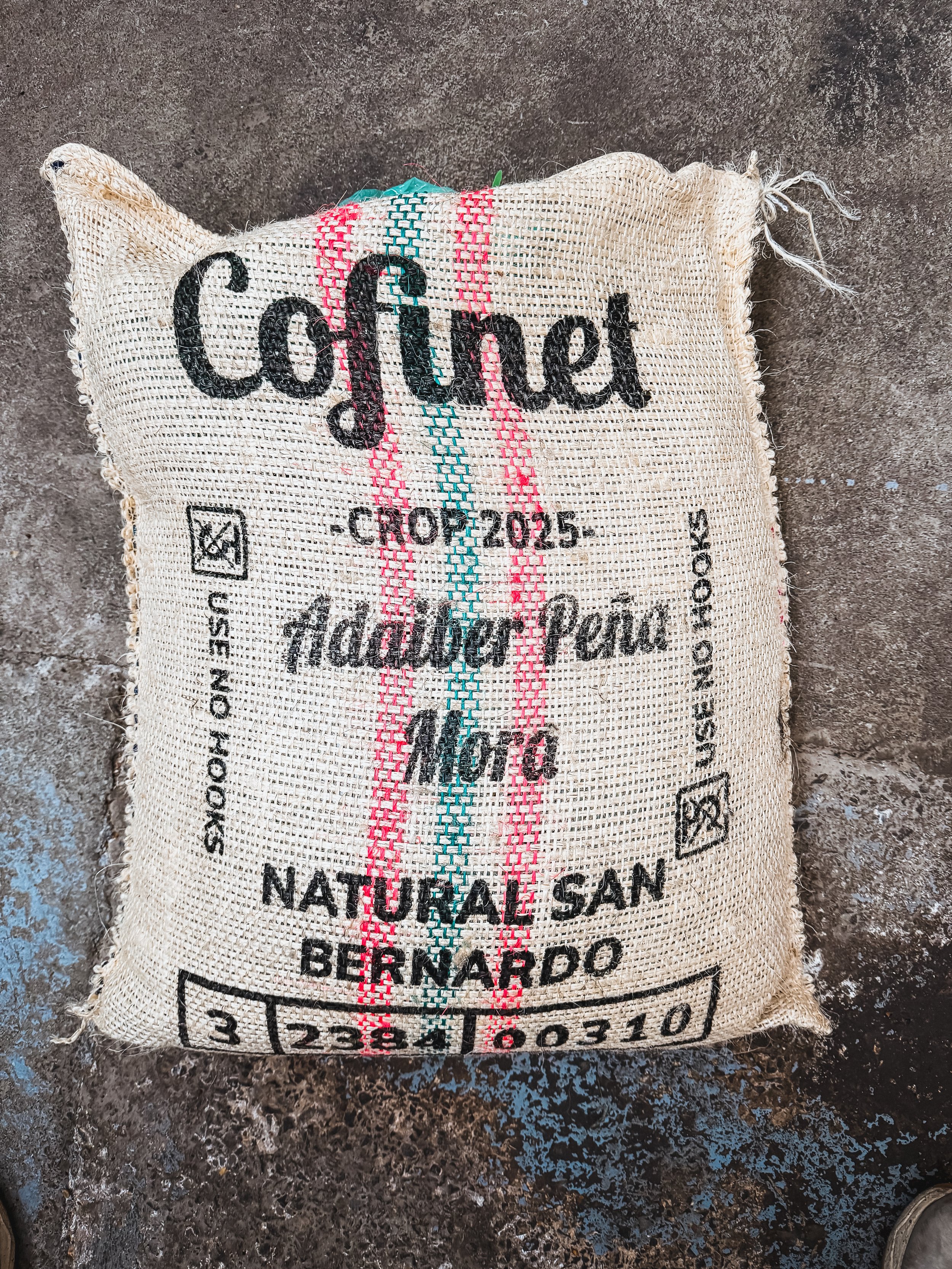
This is also a very rare varietal, San Bernardo, I’ve not come across it before. They’re big old beans, originally from Guatemala and starting to gain popularity in Colombia. And this if the cup quality of this is anything to go by, stay on the lookout for them!
Roast wise, light/medium and I think could make for a really interesting espresso. I’m a filter guy, but I can see myself going espresso for these as well. Cheers, Joel.
THE COFFEE ITSELF
The San Bernardo coffee variety, originally known as Pache in Guatemala, is a hidden gem in the world of specialty coffee, celebrated for its rarity, unique cup profile, and fascinating origins. This variety is a natural mutation of the Typica lineage, one of the oldest and most revered coffee varieties in the world. Originating in Guatemala, where it was first discovered in 1949, San Bernardo has found a niche in Colombia. Its distinct characteristics and exceptional quality have made it a prized discovery for coffee professionals and enthusiasts alike.
Only a handful of farms cultivate this variety due to its low yield and high susceptibility to leaf rust and other diseases. These factors make San Bernardo a challenging and high-cost coffee to maintain. However, Colombian farmers who have successfully managed to grow this variety have gained significant popularity and recognition in the specialty coffee industry. Their dedication and expertise have brought this rare coffee to the forefront, showcasing its unique potential.
Adaiber , along with his team of pickers, harvests only the ripest cherries. Then, the cherries are placed in the sorting area at El Arrayan farm, where the sorting team hand-sorts and floats them to remove any low-density, underripe, or defective cherries. Afterwards, cherries are exposed to 45-hour aerobic fermentation. This controlled fermentation carried by Adaiber follows the Cofinet’s protocol. This method highlights the intrinsic flavors of the coffee, resulting in a cup that is rich, delicate, and deeply connected to its origin. Once the fermentation stage is completed, the cherries are transferred to parabolic dryers. Here, they are spread evenly in thin layers to ensure consistent airflow and exposure to sunlight. The cherries are carefully monitored and turned regularly to achieve uniform drying and to prevent over-fermentation or mold.
The drying process can take between 10 to 15 days, during which the sugars and flavors from the fruit slowly permeate the beans. This creates a unique profile characterized by intense fruitiness, sweetness, and a full-bodied. We aim for a moisture content of 9.5%-11%, which is the perfect point for us.